

My brother and I wrote these fake Yelp reviews last summer. The conceit was that the reviewer is causing the very problems he complains about:
My brother and I wrote these fake Yelp reviews last summer. The conceit was that the reviewer is causing the very problems he complains about:

“Sluice Warrington was growing more and more annoyed with Rez, especially the man’s side-street studio with its clitter clatter of canvases and layers upon layers of dust and paint-pocked floors…”
Read more of “The Artist’s Wife.”
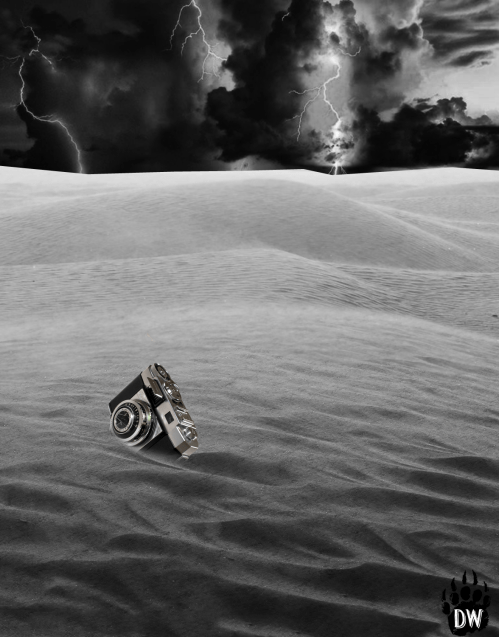
“Could be a man or a six-armed cow or a twenty-headed sex goddess.”
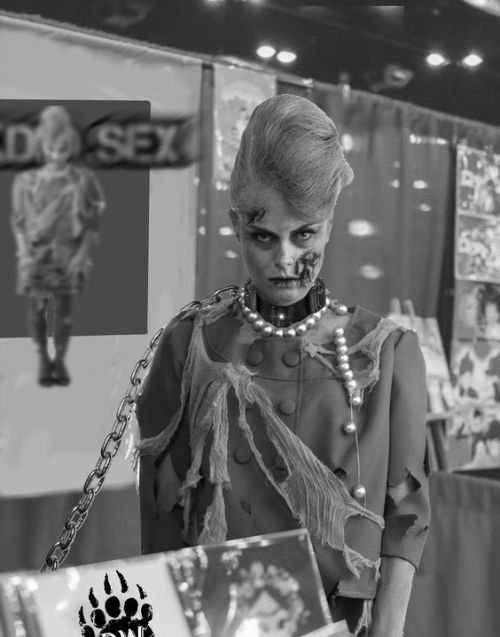
“A warehouse that could be the love child between a dumpster and a medieval castle. Coming from inside, groans. Moans.”
 “It was maybe the smell – the stench of it – which wafted from its corridor invisibly, or on a bad morning very visible, a blushing mist.”
A cigarette on the beach:
Cold,
Light-headed,
Salty,
Composed.
You inhale with the coming of the waves;
You breathe out as they slip away.
The drowsiness you feel is the cooling of the earth
as it spins through a universe of cold, salty thoughts.
The embers in the stub are little suns.
You flick away a shooting star
and know at once how small you are.
I hadn’t thought about the letter in years. It wasn’t until I was at the MoMA a few days ago that I saw a name that reminded me. Mallick Clem. It was an inscription on the wall. Mallick. Clem. The installation itself had not been substantial. Mallick had starved a cat to death in a bucket painted like a can of tomato soup. The Warhol reference I got, but the poor cat? I guess I just don’t understand modern art.
The name Clem, though, rattled awhile in my synaptic nerves. Then it came back to me. That curious incident with the letter. Clem! That had been the addressee. One Raymond Clem.
I will never forget it. Blue as the Kelley Blue Book, a proud white belt, dual headlights like plates on display and squinting taillights. It made salesmen use the word “aerodynamic” and “chrome” and its interior looked like the cockpit of a rich man’s bush plane.
We (the neighbor’s kids) would touch its windows with our faces when the owner wasn’t looking. I told Nana someday I would own that car, that very car, and she tsked me: “No one wants you driving around in an Impala.” That’s when I noticed the dirty trucks littering the street like beer cans.
Something happened, or maybe he sensed evil thoughts. A For Sale sign appeared in the windshield, and the next day someone keyed the car. I still remember the owner touching the scars as if they were still sore. “You don’t see us driving nice cars,” Nana said, watching the street, and now I knew why.
My Debate I course is engaged in Student Congress at the moment (during which students become representatives, argue over legislation, and vote whether or not to pass certain bills and resolutions).
Yesterday, on a resolution regarding the NSA and it’s activities, I had a student give a speech in support of the agency who 1) didn’t know what the acronym NSA stood for, 2) didn’t know who Edward Snowden was, 3) reassured us that the NSA couldn’t see if you were watching porn on your phone, and 4) when asked to identify at least one terrorist attack that they prevented, said 9/11.
The man opened the door for his wife and, seeing Duke Hudson, kept it open. Duke walked faster but called out, “You don’t have to. It hurts, y’know?”
“Take your time,” said the man, remaining at his post. The old man still hurried, and you could see Duke had a crick in his step, the kind WD-40 can’t fix.
[To those who believe racism is dead, I present an essay that I discovered at school. Riddled with poor thinking and writing, the paper represents (to me) the clouded judgment of xenophobia. It is only too bad the student forgot to write their name at the top.]
[I found the essay wedged into a scantron machine. Why remains a mystery, although I suspect the apple doesn’t fall far from the tree of knowledge.]
[On top is an A+.]
[I do not think the grader read too closely.]
[The title is: “Mark Twang.” This could have been clever if the paper discussed his use of regional accents. The paper does not.]
Mark Twain creates the Americana in his book Huckleberry Finn is a Harsh Mistress. Americana is the word America with a Mexican “na” added to make it sound fancy-like, which is what those Mexicans is doing, trying to make America into a lady.
[The paper’s blatant racism begins here. It never ends.]
Humanities sounds like Humanish which is what other races are. Human and ish. Mama says they’s brains are bad. Mama says my brain is not bad. Mama says brains are like gum in our heads; the less we use them the less they get chewed up.
[The student finally returns to the subject.]
Mark Twain was born Hannibal Missouri but he changed his name to Mark Twain after he chopped an apple tree “in twain.” Mark Twain was a cat in disguise which he admits when he says: “No one knew I was a cat in disguise.”
[Oddly, this student has learned the proper use of direct quotes, quote marks, brackets, etc.]
Mark was so poor he could only afford one suit, and he bleached it white so it wouldn’t look dirty. What surprised me the most about Mark Twain was that photographs existed in the Middle Ages. Sometimes black and white people were friends, other times they were slaves, and other times they were just pictures.
Now Mister Mark was committed to treating other races equally as inferiors, as can be seen by Jim. (My teacher won’t let me use his real name because it’s too controversial. One of our daily grades was to color it throughout the book with expo markers.) But Mark calls him the n-word over and over again, no matter how many times Jim makes good decisions. That’s because Twain treats all races equally as inferiors.
[What?]
In conclusion, finally, suddenly, conclusively, Twain said there’s nothing wrong with racism when he says “I had no aversion to slavery” and that he is “not aware that there [is] anything wrong about it.” Plus “God approved it.”
[This is missing context. Mark admits this was his thought process as a child, but he greatly improved his understanding by adulthood.]
I try to hate everybody the same, except I don’t hate Mama, only when she’s pooping in the garbage disposal.
And that’s my biografy.
[This marks the student’s one and only spelling error.]
[The paper ends with a couple doodles of the sink.]
On the occasion, my students will have outrageous interpretations for the language in Shakespeare’s Julius Caesar, such as in the repeated expression “peace ho!” or “stand ho!” and the late arrival of a soldier named Clitus.
All these manifestations make my students crack up predictably, year after year. But the section most perversely twisted is the following scene from Act V, which I record here for your amusement and under this new context.
Hint: Brutus is asking these soldiers to kill him, but that’s not revealed until the end of the dialogue.
BRUTUS: Sit thee down, Clitus. Slaying is the word [in my students’ lexicon, slaying has a sexual connotation]. It is a deed in fashion. Hark thee, Clitus.
(BRUTUS whispers to CLITUS)
CLITUS: What, I, my lord? No, not for all the world!
BRUTUS: Peace then. No words.
CLITUS: I’d rather kill myself.
BRUTUS: Hark thee, Dardanius.
(BRUTUS whispers to Dardanius)
DARDANIUS: Shall I do such a deed?
CLITUS: O Dardanius!
DARDANIUS: O Clitus!
CLITUS: What ill request did Brutus make to thee?
DARDANIUS: To kill him
[My students: Ohhhhh…]
The room was used for secular reasons. Union meetings, pro-dev seminars, documentary screenings, a Women’s Book Club. One day out of the week, however, the room became a sacred space – one of those churches you see packed in with animal hospitals and loans offices in a mall strip beneath the knees of a freeway. This church didn’t have block letters above its door announcing “The Church of the Risen Christ” or “Corner Ridge Pentecostal Assembly” or “All Faiths Ministry – Our Service is Heavenly!” Instead, block letters read “Community Center” and offered a 25% discount on weekends.
The church met Saturdays. Its congregation were Pacific Islanders from Samoa or some other island. Whatever it was, if you confused the family with a neighboring island like Tonga, they would curse you lightheartedly in their language, either Samoan or Tongan. Most of them weighed four hundred pounds; their cells, which had found clever ways to store energy on long journeys at sea, had not adapted well to America’s heart-stroking, hip-expanding eating patterns. Still, they laughed.
We knew about the family since they would come by Depression Alliance (we met on Tuesdays after Bingo Derby). We’d eat their coconut rice and joke about turning our meetings into Overeaters Anonymous, although we were a little unsure about the Pastor, at least until he revealed he was having trouble finding women. Someone said to try the zoo and we laughed – a connection made, some raw commonality.
 Desmond, Write