Life, Scifi, Writing (Published)

Published — “Carnaval de la Coccinelle”

The Were-Traveler published my speculative mystery fiction, “Carnaval de la Coccinelle.” For a long time I’ve wanted to write a locked-box style of detective fiction, specifically a story where the central mystery revolves around a cipher.

Meanwhile, the backdrop is the same universe as “Water Bees,” an alternate history where the world is populated by men and a menagerie of bugs. There are no squirrels, whales, or seagulls, and man is theorized to be some evolved form of worm.

“Carnaval” also follows the same protagonist as “Water Bees,” the gruff police inspector Henri Moreau, and the setting is yet again Arles, France, at the turn-of-the-19th-century.

The Were-Traveler is a fiction eZine that publishes speculative fiction in themed anthologies (my piece was published in a whacky carnival-&-circus anthology called SuperFreak: Freakpunk #2). The magazine is run by the delightful author, publisher, and editor, Maria (M.X. or Reo) Kelly.

Life, Writing Process

Behind-the-Quarterly

For a long time I’ve envisioned Rune Bear Magazine divided between Weekly and Quarterly. We would publish weekly stories under 300 words, but we would also have a seasonal writing contest.

Unfortunately, the Quarterly page on our website has looked like this for two years:

The guy we put in charge of Quarterly turned out to be a dud, so we let him go and I took over the contest. Instead of long-form writing, I decided to pull back to the flashiest flash fiction — the Drabble. Stories of 100 words exactly.

With $10 rewarded to the winner.

My editors came up with a list of prompts, democratically selected one, we hired an artist, and boom—I’m proud to announce that Rune Bear Quarterly is open for submissions until April 30, 2020. May will be a reading & selection period with the winner announced on May 31st.

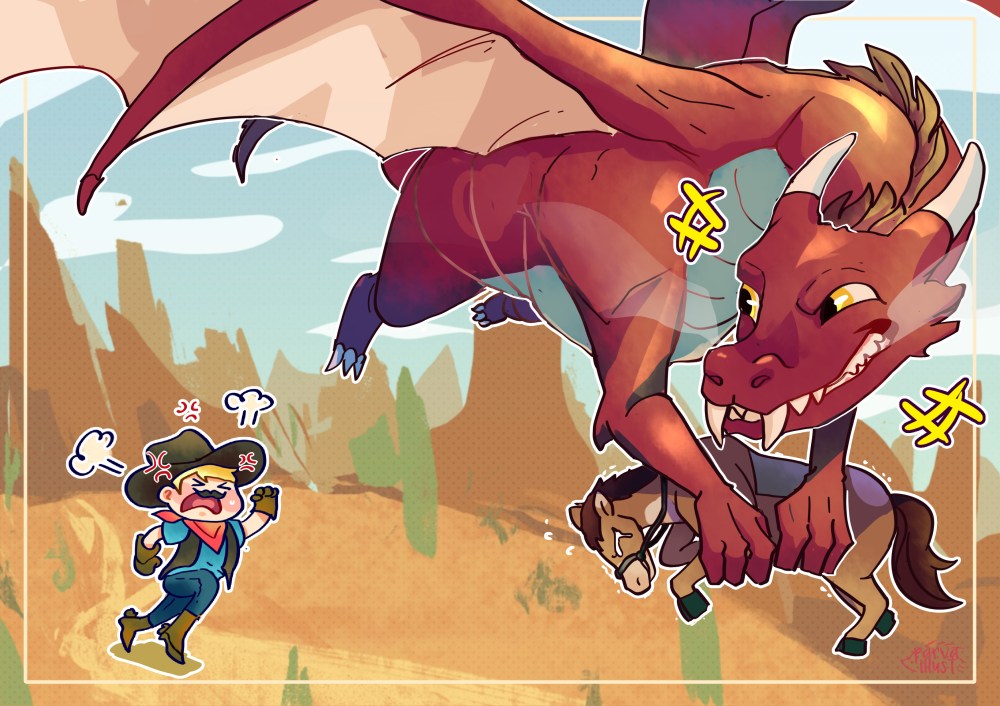
The Spring 2020 prompt is “Weird Wild West” and the inspirational image (by no means the only interpretation of the prompt) is a dragon stealing a cowboy’s horse. This piece was made by the very talented Hari Nezumi, although in the future we will be relying on in-house artist Robin Stranahan.


Life

Nonfiction — “Chee Chuk”

Few people know that I grew up in Indonesia. As a writing exercise, I decided to reflect on some of my experiences in the jungles of Sumatra, specifically on my first encounter with a local lizard species.

Chevron put an oil camp in the center of a village previously unspoiled by Western advances except for Disney Princess shirts and dirty motorcycles. There they placed us, protected from friendly brown-skinned neighbors by fences and barbed wire and border guards armed with clubs and slingshots until the Bali Bombing when they upgraded to rifles.

It was always raining except the days they burned trash. Then the misted air filled with the green acids of plastic. Sometimes when it rained I would let out the cats. There was a gray sidewalk that wound around the house, kept dry by an extension of the roof and gutter. The cats, mewing softly, would scour the perimeter for shelter-seeking beetles. We didn’t have to watch them; the rain made an excellent cage.

At night, the windows went chak chak chak. Mom thought the villagers were tapping sticks against the glass.

My room takes some explaining. Our house was a one-story American imitation, but it had a porch that made an L across two sides, and this porch was enclosed, sealed by walls and long windows with metal bars that made a lattice instead of stripes. My room was created by partitioning some of the porch.

There were three doors in this room—one to the porch, one into the house, and the last led to the cement path and green furry grass. I had a strip of glass that peered outside and a strip of glass that looked into the living room. At night, I could look through the window at my parents watching television, like a forgotten child peering into a house, seeing how happy everyone is without them.

I made the discovery in the middle of the night. Lying in bed, two cats forming a ying-yang on the covers, woken by the purple-white call of lightning, I heard beyond the tah tah tah of rain the relentless sound of chak chak chak.

You have a reckless spirit when you are young with a theory and animal companions (even if they are selfish little cats). I crept to the window and peered into the wine-dark. Finding no one, I unlocked the door to the outer elements and pushed until the wood-rust cracked and the door swung open.

My impressions of this moment include the: wetslick air, the cascading wall of water, the creep of feet and paws, meows emitted by cats (meong meong in Bahasa), no one in sight but me, and still the sound of sticks.

I paused, the cats padding softly around me, and looked to the window. There, a thin, brown lizard emitted the sound: chak chak chak.

The lizard noticed us and leaped away, was caught by the cats, squirmed out its tail to distract them, and, dignity lost, escaped into the grass. Relieved, I closed the door, and as I fell into slumber, I return from the backwaters of memory to my home in Texas – a place far-flung from the fantasy of the jungle, but no stranger to mystery and the hug of humidity.

Fantasy, Life, Writing (Published)

Published — “Familiar Girls”

My microfiction “Familiar Girls” was published by Blood Song Books in “Curses & Cauldrons.” Their witch-based anthology boasts “over 200 tiny dark tales of magic, mischief, murder, mayhem & madness” and is available as an ebook or trade paperback. I’m proud to be published alongside so many great writers, including my wife!

Oh, and here’s a great review of the anthology.

Fantasy, Life, Writing (Published)

Published — “The Other World Tree”

My flash fiction, “The Other World Tree,” was published in Quail Bell Magazine. Inspired by stories set in Victorian London and the Upside Down in Stranger Things, I wrote a two-page story about a girl’s encounter with a dimension that’s not benevolent or wondrous.

Quail Bell Magazine is a literary magazine that finds and publishes seriously good writers (I should know, I’m one of them). Founded by Christine Sloan Stoddard, Quail Bell seeks “real and unreal stories,” especially stories that are “imaginary, nostalgic, and otherworldly.”

As they say in their motto:

Our go-to spell? Art + Ideas = Magic.

Life, Scifi, Writing (Published)

Published — “Water Bees”

Flame Tree Publishing included my gothic horror story “Water Bees” in their Gothic Fantasy print anthology Detective Thrillers. The anthology of murder mysteries combines classic and contemporary writers, so my work is featured alongside G.K. Chesterton and Arthur Conan Doyle.

“Water Bees” follows an elderly police inspector named Henri Monreau as he hunts through Arles, France, in search of a missing entomologist. In case the city sounds familiar, it’s where Vincent Van Gogh painted some of his most famous works and then went mad. What makes this story unique, and a tad above the typical, is the world concept—Henri lives in an alternate universe where there are only bugs and humans. No squirrels, deer, fish, birds, just ants, beetles, spiders, and people, who are theorized to be an advanced form of worm.

Flame Tree Press is a London-based publishing company that’s generally interested in science fiction, fantasy, horror and crime fiction, but also dabbles in artisan notebooks, illustrated calendars, cards, jigsaw puzzles, and other gift-friendly forms. Founded in 1992, the press’s self-described purpose, to quote Pablo Picasso, is to wash “the dust of daily life off our souls.”

Life

Rejection Letters of 2019

Although teaching is ridiculously time-consuming, I still try to write on the side. Here are the rejection letters I received over the course of 2019. Some of these works ended up being published later. Others were blogged or tossed into some backwater folder, never to be unearthed again.

Also, let me be clear. I do not harbor any of these magazines any ill will. Rejection is a constant in any writer’s attempts at a literary career. There’s breathing, there’s eating, and there’s a monthly rejection letter in the inbox.

Continue reading

Life, Writing Process

Joe Hill — Writing Things

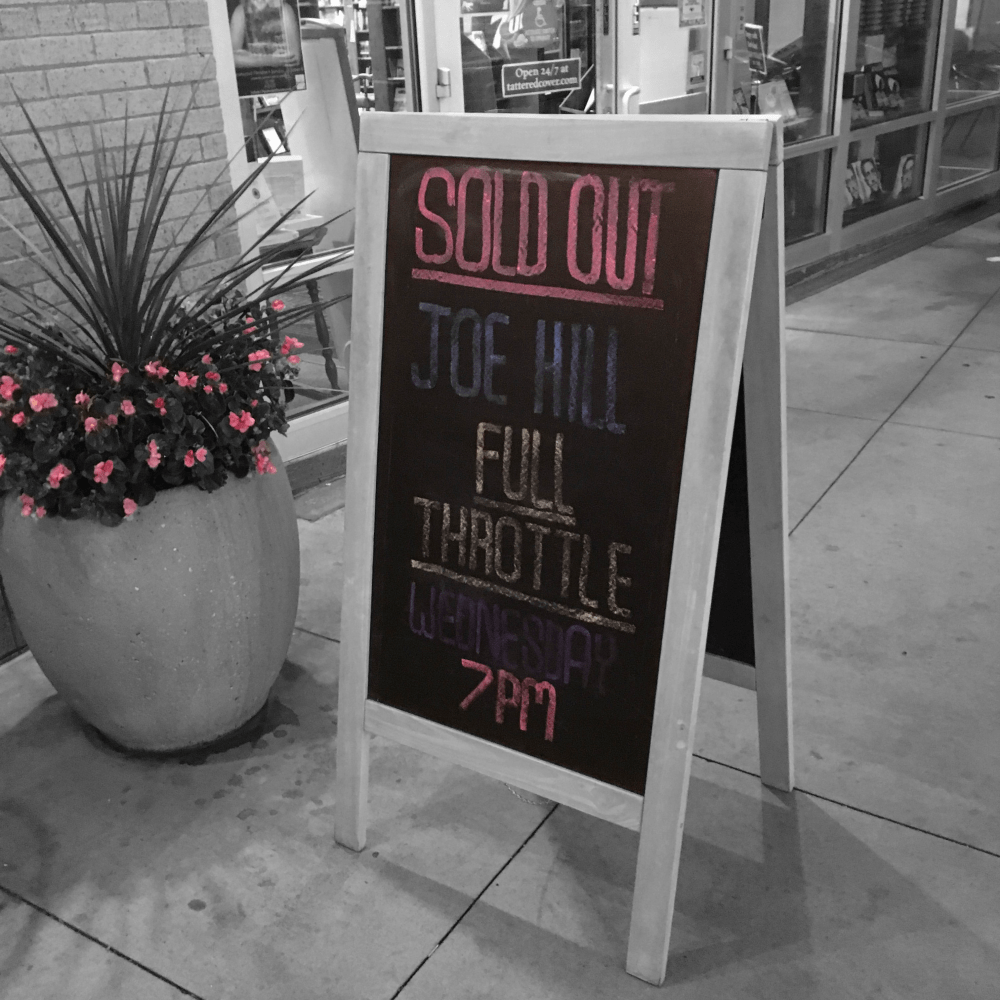
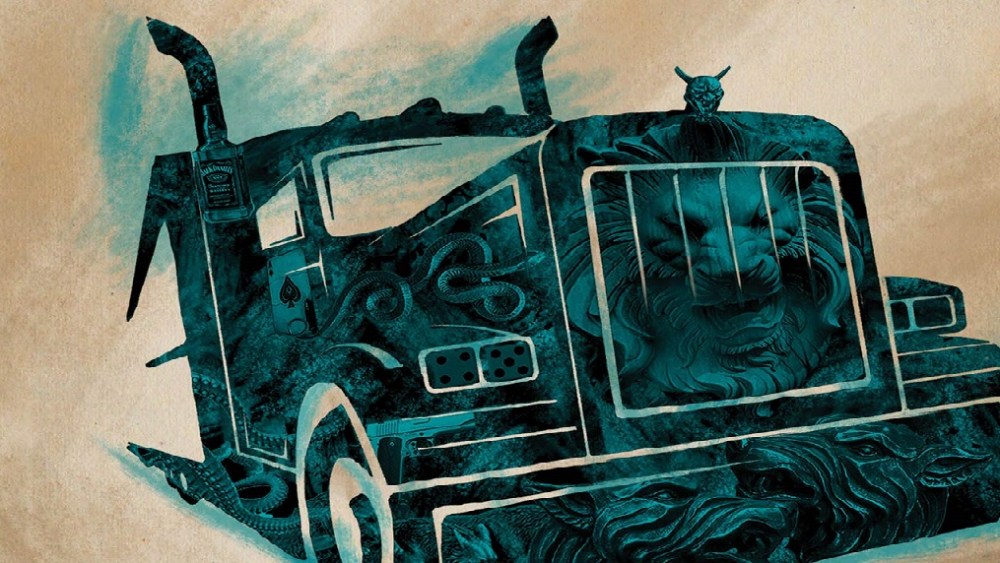
Joe Hill, the legendary offspring of the legendary Stephen King (and a damn good writer in his own right, I’m guessing his constant connection to his father must be irksome), came to the Tattered Cover to discuss his short story collection, Full Throttle, and writing in general.

With a friendly, comedic demeanor, and those classic glasses and beard, Hill spoke about his own experience in the publishing industry and read aloud an unpublished short story. The Q&A lasted an hour, followed by another hour of signatures and photos, but I was able to glean a few writerly advicey things.

Here they are:

Good ideas do not necessarily
translate into a good story.

Joe Hill cautioned that one-sentence ideas don’t necessarily make for a story. He mentioned that he was very good at making an elevator pitch, and yet “the better I got it the more I became convinced it’s completely unimportant.” Of course a good concept pulls people in. Nosferatu, for example, has a great pitch: “What if a guy had a car that ran on human souls instead of gasoline?” But, while Hill said he comes up with two or three ideas a week, “it takes me about a month to write a short story and it takes me about three years to write a novel.” The work isn’t coming up with the idea, but what the next four hundred pages will look like; and part of his second-guessing and insecurity regards whether the fundamental idea will be altered irreconcilably, or if the idea must guide the direction of the piece, or if the concept is harming instead of benefiting.

“I’m orderly on the outside,” Hill said. “But inside it’s total chaos.”

The most interesting characters
start as mysteries to the author.

When asked whether he’s a plotter or a panster, Joe Hill said he’s “definitely in the latter camp.” Outlines do not work for him precisely because the most “exciting part of writing a short story or novel is falling in love with a character and wanting to learn about them.” How could he predict in an outline how a character will interact or conflict with others? How he or she will deal with the crisis at hand? According to Joe Hill: “There’s stuff about them that I can’t see but I feel will be revealed if I put them under pressure. Plot is the instrument to create pressure that will force the truth from my lead characters. I can’t plot out a outline about what they’re going to do or how they will respond to trouble because I don’t know who they are yet. … What do they hate, what do they love, what are their daydreams? I can only find that stuff out by churning out a lot of material.”

Sometimes write scenes for the reader and sometimes write scenes for you.

For a four hundred page book, Joe Hill will write a seven hundred page draft. All of which is a quest to discover who his characters are, how they tick and tock and talk. So some of his scenes are written for readers; they’re “part of the journey” the reader is on. But some scenes are necessary only for Hill to know how his characters might respond to this situation or that squabble. Those ‘scenes for me’ get cut, of course, but they help Hill solve the mystery of his characters.

Life, Writing Process

James Brandon — Writing Things

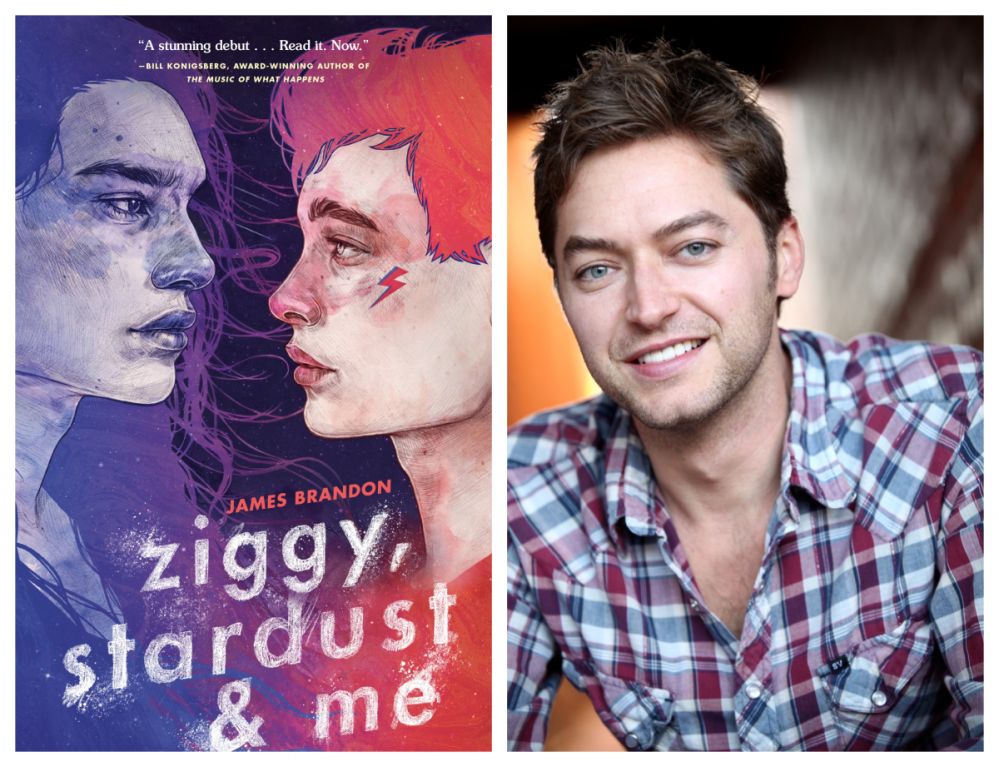
James Brandon, author of Ziggy, Stardust & Me, came to visit my library. In fact, we were his first official school visit.

Brandon spoke of his experience growing up as a gay teenager when homosexuality was considered a sin and aberration and not another sexual orientation among many. He showed us awkward photos from high school, complaining that “I didn’t know what to do with my hair.” Now, in plaid and jeans, with friendly glasses, a high forehead, and hair at a near-coiff, he’d definitely figured out what to do with it. But the point of his lecture was to “Believe in Yourself.”

Brandon also spoke about forgotten LBGT histoy, including the year when the DSM stopped listing homosexuality as a mental disease. On a slide he showed us how a Chicago newspaper described the event: “20,000,000 Gay People Cured!” We learned about the Gay Liberation Front and Doctor Anonymous and the barbaric treatments used to ‘cure queerness.’ And we learned how an author can connect his own intimate life experience with greater historical events.

Brandon also imparted some excellent advice for our audience’s creative writers:

  • Writing is creating real life characters. As an actor, I need to research how to embody a person. As a writer, I need to research how to embody twenty persons. One of the techniques I remember reading on the internet was to write fifty things a reader will never know about your character. I decided to go further and filled a spiral notebook for each character. Dialogue became easier because I knew about the secret conflicts my characters were dealing with.”
  • Research will unlock the greatest mysteries of your novel.”
  • “I needed to tell this story because I wasn’t seeing me out there. I wanted to write not by looking in but looking out.”
  • “It’s okay if your book takes a while. Writing my book took about 18 months to go from draft zero to draft one. Then I wrote about a hundred drafts before I turned in my manuscript to my agent, and she and I rewrote the book three more times (which took another two years) before submitting it to publishers.”
  • Most important, believe in yourself. And be you. We don’t need anything less than who you are. And your differences are your most beautiful you. We suffer without it.”
Life, Scifi, Writing (Published)

Published — “Birdu Vanilla”

365 Tomorrow published my scifi microfiction “Birdu Vanilla.” The story is a reflection on senseless gaming but don’t confuse me for a ‘video games make you hurt people’ right-winger ignoring the rightful causes of gun violence. I’m more of a flightless bird who’s too fat to fly. You’ll notice the comments are more forgiving than my last piece on 365.

Justifiably so.

365 Tomorrows is an online journal that publishes speculative fiction every single fething day. The site is an excellent complement to your morning bowl of cereal and glass of Moloko Plus.