Writing Process

Betaread, Proofread, Critique

The purpose of this article is to share some of my experience reading unpublished manuscripts and to provide some order to the process.

First, the terms:

A beta reader is a nonprofessional who reads the first or second draft of an unpublished manuscript.

An alpha reader does the same with an unfinished manuscript.

A proofreader is a professional who corrects syntax, spelling, and grammar.

A critique partner is a professional who assesses a manuscript’s substance and style.

Miche Gray-Newton. Writing in Theory. Saatchi.

For the past seven years, I’ve been reading and critiquing my friends’ unpublished, often unedited manuscripts. It’s grueling work—perusing a text for enjoyment and the author’s edification. But I do it because, well, I care about my friends. I want them to do well.

Continue reading

Writing

Short Prose about Teaching (Part I)

“I open the year with a joke. ‘My name is Mr. White, like the color of my [the students look expectantly toward my skin] walls.’ Cue enough laughter to sustain the joke next period.”

Read more of “Starry White.”


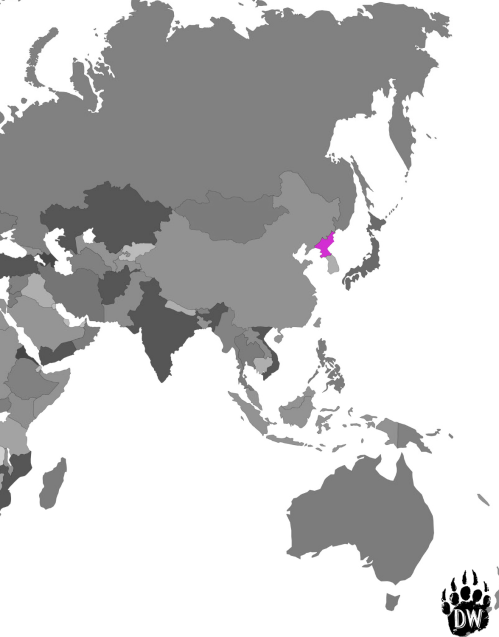
“Today, I had a rather innocent and ill-informed student inspect an atlas on the wall (one with only the boundaries of countries but no printed names), point to Cambodia, and say, ‘I think that’s South Koran.'”

Read more of “Geography and Centipedes.”


“My classroom is a block like those you stack in first-grade.”

Read more of “Teaching Tapas”

Writing

Nonfiction — “Teaching Tapas”

(One)

My classroom is a block like those you stack in first-grade. Desks stand like lines of British soldiers, and students shout and throw rulers and text each other in a war of attention. My desk is the general’s tent—to the side of the parade grounds and barracks, capable at a moment’s notice to survey the ranks (all I have to do is lift my eyes from my screen to review a regiment using phones to redo eyelashes).

From this distance, it’s difficult to tell if a student is passing notes digitally or using a calculator to complete physics problems. With a war weary sigh, sans mustache, cigar, and epaulets, I rise from my command to remind the infantry that the assignment is due in five minutes.

(Two)

Sometimes I’ll see a student staring out the window at the end of the hall. But what does she see out there that holds her attention? I know from experience there’s only a gray lot, cars, the track field, the tennis court—all yellow and hazy behind the dusty glass.

But I don’t think she’s looking at anything in particular.

Maybe it’s a mood she senses on the other side of the pane. Across the gold beer plains, coming from distant mountains.

A feeling she won’t find among white walls that slide into a maze of locked rooms and lockers. Halls guarded by ceiling cameras and attentive teachers.

Out there? Streets and side-streets. The brown roofs of suburbia. Highways weaving with the hills like little gray veins. And patches of trees binding shadow-flooded plains to the homes of coyotes.

Sometimes I know what she sees.
Life, Writing Process

Failed — Desmorious

Every writer has several projects initiated with gusto, abandoned with reluctance. My first was a forty-page novel in middle school—a Lord of the Rings knock-off called The War of the Bowl. In high school, my friend Jon Ying and I devised a western desperadoes-and-dragons webcomic called Dustbound. In college, I wrote rough drafts and buried them in the rough. Even now, as I revise my novel, I fear its future in a back-folder on Dropbox.

Continue reading

Writing Process

Rune Bear Deviant

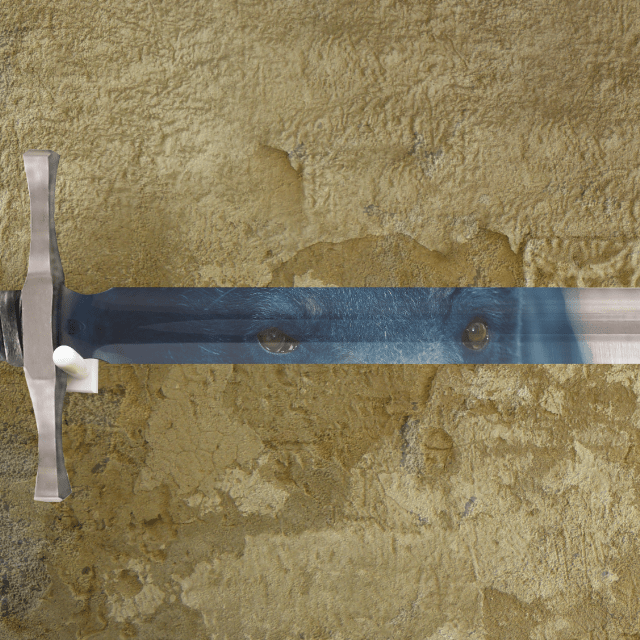
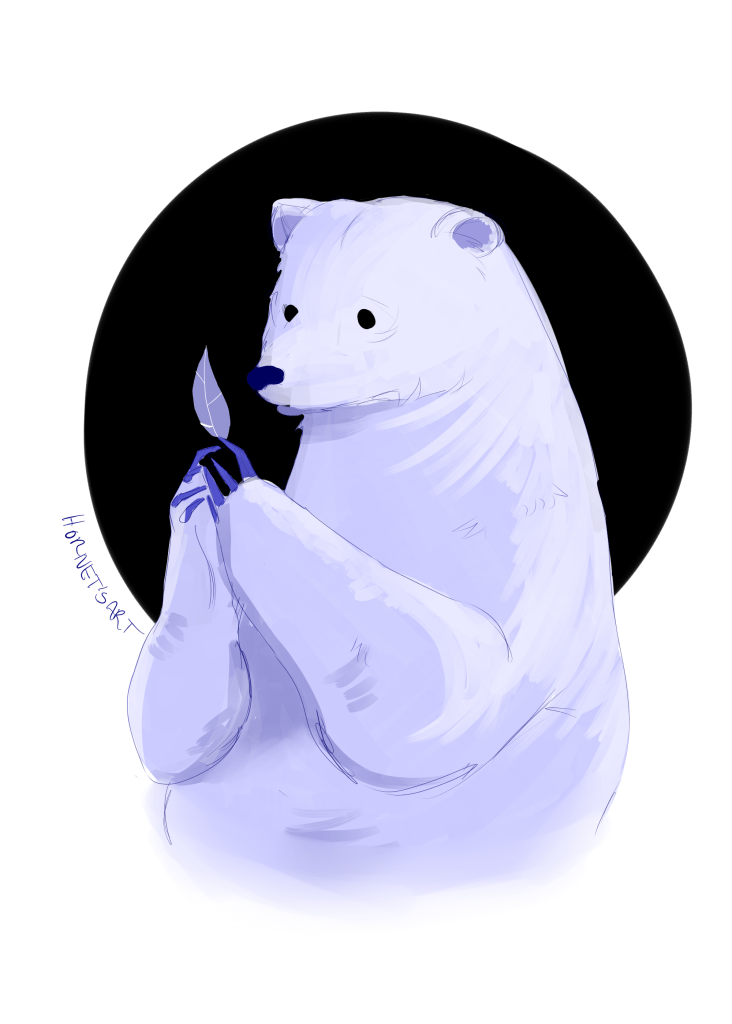
I’ve been photoshopping advertisements for Rune Bear‘s weekly posts. In each image I tried to capture some element of the companion piece while not making a picture that sucks terribly. Some have been not-so-great, as to be expected, but these three below were somewhat successful.

The first is a rune bear mounted on the wall for Amanda Bender’s “The Hero and the Hunter.” Her piece is part one of an emerging storyline (we’ll be posting Part II at a later date). Basically, a failing zoo has to turn to a big game hunter who pursues exotic beasts. But since Rune Bear Weekly features pieces that are under three hundred words, I’ll have to be careful summarizing anything, since the synopsis might end up longer than the story.

Look at those pain-sullied eyes. Look at ’em.

The second image is of a bear spying on himself in a sword blade. This was created for T. J. Locustwood’s “The Recruitment of Steel.” The piece is a cantos that pairs with his upcoming book, Alexander Croft and the Corvian Wrath.

Finally, for Joe Amaral’s “We are Seeds,” about a village destroyed and its sole vengeful survivor (a little girl with druidic magic),  I shopped a rune bear casting a leafy magical curse.

weareseeds2.png