Writing

Short Prose about Teaching (Part I)

“I open the year with a joke. ‘My name is Mr. White, like the color of my [the students look expectantly toward my skin] walls.’ Cue enough laughter to sustain the joke next period.”

Read more of “Starry White.”


“Today, I had a rather innocent and ill-informed student inspect an atlas on the wall (one with only the boundaries of countries but no printed names), point to Cambodia, and say, ‘I think that’s South Koran.'”

Read more of “Geography and Centipedes.”


“My classroom is a block like those you stack in first-grade.”

Read more of “Teaching Tapas”

Writing

Nonfiction — “Teaching Tapas”

(One)

My classroom is a block like those you stack in first-grade. Desks stand like lines of British soldiers, and students shout and throw rulers and text each other in a war of attention. My desk is the general’s tent—to the side of the parade grounds and barracks, capable at a moment’s notice to survey the ranks (all I have to do is lift my eyes from my screen to review a regiment using phones to redo eyelashes).

From this distance, it’s difficult to tell if a student is passing notes digitally or using a calculator to complete physics problems. With a war weary sigh, sans mustache, cigar, and epaulets, I rise from my command to remind the infantry that the assignment is due in five minutes.

(Two)

Sometimes I’ll see a student staring out the window at the end of the hall. But what does she see out there that holds her attention? I know from experience there’s only a gray lot, cars, the track field, the tennis court—all yellow and hazy behind the dusty glass.

But I don’t think she’s looking at anything in particular.

Maybe it’s a mood she senses on the other side of the pane. Across the gold beer plains, coming from distant mountains.

A feeling she won’t find among white walls that slide into a maze of locked rooms and lockers. Halls guarded by ceiling cameras and attentive teachers.

Out there? Streets and side-streets. The brown roofs of suburbia. Highways weaving with the hills like little gray veins. And patches of trees binding shadow-flooded plains to the homes of coyotes.

Sometimes I know what she sees.

Life, Writing Process

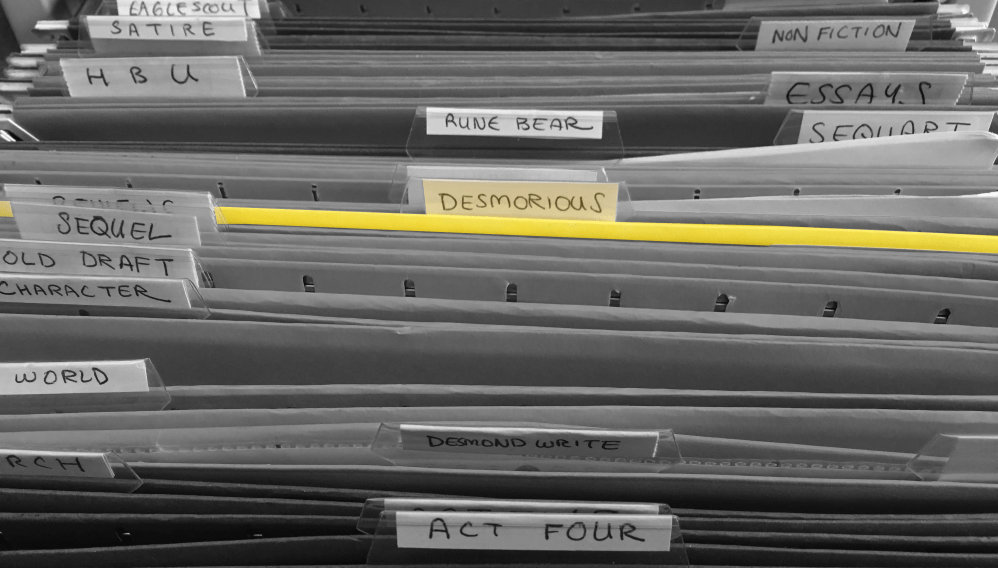
Failed — Desmorious

Every writer has several projects initiated with gusto, abandoned with reluctance. My first was a forty-page novel in middle school—a Lord of the Rings knock-off called The War of the Bowl. In high school, my friend Jon Ying and I devised a western desperadoes-and-dragons webcomic called Dustbound. In college, I wrote rough drafts and buried them in the rough. Even now, as I revise my novel, I fear its future in a back-folder on Dropbox.

Continue reading

Writing Process

Rune Bear Deviant

I’ve been photoshopping advertisements for Rune Bear‘s weekly posts. In each image I tried to capture some element of the companion piece while not making a picture that sucks terribly. Some have been not-so-great, as to be expected, but these three below were somewhat successful.

The first is a rune bear mounted on the wall for Amanda Bender’s “The Hero and the Hunter.” Her piece is part one of an emerging storyline (we’ll be posting Part II at a later date). Basically, a failing zoo has to turn to a big game hunter who pursues exotic beasts. But since Rune Bear Weekly features pieces that are under three hundred words, I’ll have to be careful summarizing anything, since the synopsis might end up longer than the story.

Look at those pain-sullied eyes. Look at ’em.

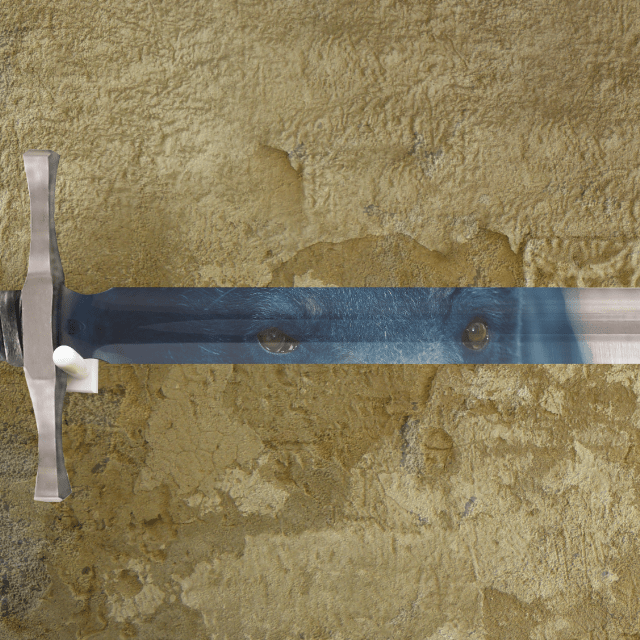
The second image is of a bear spying on himself in a sword blade. This was created for T. J. Locustwood’s “The Recruitment of Steel.” The piece is a cantos that pairs with his upcoming book, Alexander Croft and the Corvian Wrath.

Finally, for Joe Amaral’s “We are Seeds,” about a village destroyed and its sole vengeful survivor (a little girl with druidic magic),  I shopped a rune bear casting a leafy magical curse.

weareseeds2.png

Life, Writing Process

Medicolegal Death

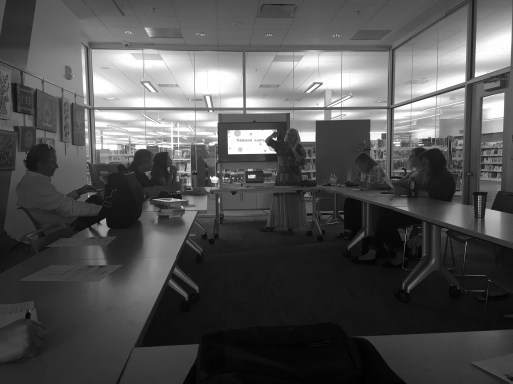
My wife and I went to see a medicolegal death investigator from the Douglas County Coroner’s Office discuss her profession—a presentation that was surprisingly lively. I thought I’d share a few interesting bits from the morbid monologue.

Naturally, the coroner was late a few minutes. Her Excuse? “Sorry, everyone, somebody died. No, really.”

According to her, a physician determines cause of death. But her job is to determine the manner of death. Both examine the body, but she also goes through the corpse’s effects, to the scene, to their homes and work places. Unlike the police, she doesn’t need a warrant.

The cause of death is something like this: stab wound to the heart. the initiation of the chain. The mechanism is what actually does the killing. So, stab wound? Mechanism: Exsanguination, i.e. blood-loss.

Cause: Pneumonia. Mechanism: Hypoxia, or lack of air, leading to organ failure.

As for manner? That’s the context of the killing.

She gave us the list of manners: homicide, suicide, natural, accident, undetermined. While the examiners will provide comprehensive data about the death, the manner ends up fitting into one of these five simple categories.

One of the coroner’s examples was an x-ray of a man with a nail in his skull. The point was near his ear, the dull hammerable bit in the center of his brain. Cause of death? A nail through the brain. But what was the manner?

After examining the wound, it’s entry, the equipment nearby, we determined the manner involved a nail gun. Judging by the angle, it was likely a suicide. He took a nail gun to his temple and blasted away.

We took cases (from out-of-state and with names removed) and had to determine manners of deaths. Mine was a guy who tried to prove a gun wasn’t loaded by putting it to his forehead and pulling the trigger. She called it a stupidicide but it was officially an accident.

We also looked at photos of grisly ends and did the same. There was a man who was struck by deer antlers. You could tell from the prong-pattern across his chest, the lacerations on his sides. There was someone who fell from a chair while fixing a lightbulb. Well, there was the chair, there was the lightbulb. We also looked at scenes without bodies and determined the cause of death. An alcoholic’s bed (the bottles, the trash basket, the sheets). A suicide by driving into a near-stationary bus (no skid marks).

One of my favorite anecdotes was about a skull she found. The examiner being a generalist, she passed on the item to an anthropologist, who determined the age and time period of the skull. She sent isotopes (water) to a lab and DNA to another lab. A femur was discovered with bite marks; this led her to find bone fragments in old bear scat. Within two weeks, they knew everything about this teenage girl, including how she was murdered.

The entire presentation was highly disturbing. I was appalled. My wife was enthralled. I hope she doesn’t get any ideas.