Today we finish a hundred pages of literary abandon.
When I was ten, I wrote The Hero on Foot: The War of the Bowl. It was a fantasy travesty, an attempt at fascinating narrative by an immature writer that ended in drivel. You can start from the beginning by going here.
But we’re done. This is my last post on THOF:TWOFB (huh, not as catchy as LOTR) covering the final chapters.
Thank the gods there never was a sequel.
Chapter Eight
Our ‘hero on foot’ has come a long way. Javis has befriended wizards, slain knights with silly names like Sir Venice and Sir Treacle, been healed by a pontificating ogre, ordered a ‘hot squirt’ in a cathedral dedicated to cats, and tossed an urn into the face of his deadliest foe, then beheaded the guy.
But now Javis has to deal with something even stranger.
The Hero on Foot: The War of the Bowl is a trash book. Every page, every sentence, every word. Trash. And I can say that because I’m the book’s writer (in my defense, I wrote the abomination when I was ten). The manuscript is a compilation of every overused fantasy trope bound by poor syntax and grammar. Want to start at the beginning? Go here.
Today we will look at the only battle in the promised ‘war of the bowl.’ Spoiler. The battle is trash.
Chapter Six
A recap. Our hero is chilling in a cathedral. His mentor is hanging out in a cave. The villain is unconscious, carried around by his friends.
So basically nothing is happening.
But this chapter isn’t called “The Battle” for nothing.
This is Part III of the book I wrote in middle school. If you want to start from the beginning, go here.
In 1999, when I was ten, I wrote a book. It was called The Hero on Foot: The War of the Bowl and it was the worst thing ever written. Some twenty years later and I’ve recovered that particular manuscript from my parent’s attic—and out of my immense generosity, I’ve decided to review, summarize, and post excerpts for your general amusement.
The book was a poor imitation of Lord of the Rings with the One Ring to Rule Them All replaced by kitchenware. Tolkien’s decision to use a ring makes sense. A ring is ceremonial, has intrinsic value, can represent the union of souls, has a sense of permanence and significance. Today, we wear rings to show our devoted love, or alma mater, or sport’s team, or membership in a secret society. A bowl? I guess you use it to eat cereal.
There’s a delight in watching bad movies. I hope y’all will equally enjoy bad literature.
Chapter Four
If you’ve missed the story so far, all you need to know is that our hero is badly injured and lost in the woods. That’s really all you need to know. Seriously.
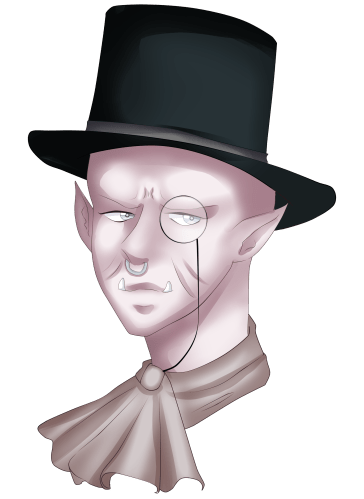
Javis Kyle is discovered by an ogre named Lars. Apparently my ogres are smart, compassionate creatures.
And this is what ten-year-old-me thinks smart people sound like:
By the way, Lars is dressed like a gentleman scholar. I hired an artist to recreate this.
This is Part II of my summary of the book I wrote in middle school. If you want to start with Chapter One, go here.
In Several Short Sentences About Writing, Klinkenborg says every good writer starts with a good sentence. They write a good sentence, then write another. But there isn’t a single, decent string-of-words in The Hero on Foot: The War of the Bowl. Even the title chonks like a basketball-sized cat.
But that’s why we’re here. Not to read literature, but to laugh at ugly prose. The following is the first book I ever wrote.
Enjoy?
Chapter Two
First, a recap. Our hero’s family is dead, his village destroyed. Okay, recap over.
We find our protagonist living in the woods Into the Wild style.
Is it?
Is it cool?
I imagine my fifth grade teacher writing “cool” like John Oliver says “dope.”
(John Oliver also has an unimpressed “cool” but the gifs were too grainy.)
The following is the first ten pages of the book I wrote in middle school. This is a roast, not literary lesson. Come chuckle with me at an author who tossed into his novel everything he thought was cool without regard to plot or complexity or voice or how to tell a good story.
Might be fun.
Prologue
The book begins with a prologue in italics because of course it’s italics. The prologue is less scene, more opening scrawl of Star Wars. It’s pure, unadulterated exposition. Horrible, unnecessary exposition.
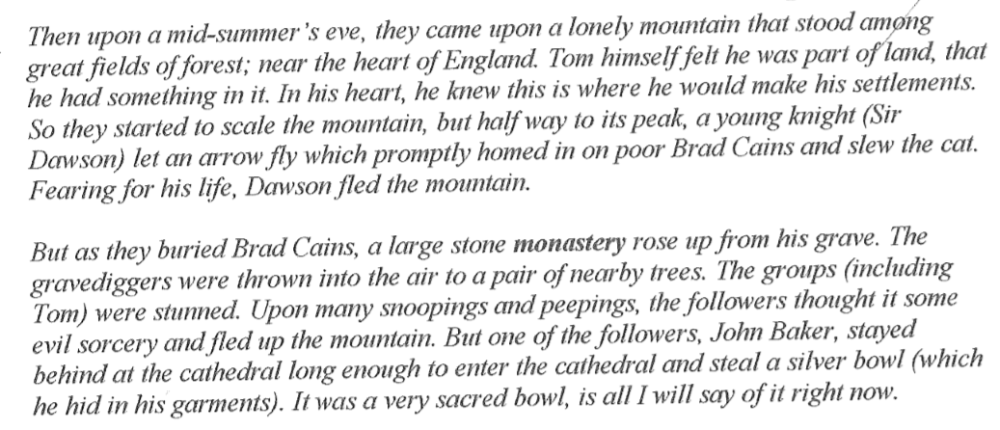
We’re introduced to the ancestors of our protagonist for some reason. These early knights migrated to a mountain and created a town. It’s not complicated. They were accompanied by a Talking Cat.
The Cat is murdered and never mentioned again.
That is nearly all I say about the Silver Bowl. While the artifact resurfaces later, its function, its purpose, its abilities are never explained.
Obviously the idea of a tempting, powerful metal object was stolen from Lord of the Rings. Ten-year-old-me must have ransacked his brain meat trying to think of an alternative to The One Ring and settled on a bowl. Maybe he was eating cereal.
This is my latest installment of project failures.
Think of it as Literary Confession, except these deeds were not done, remain unfinished, or never started.
Read on. Who knows? Maybe you can steal from the ashes.
I’ve finally reached the age where my sexy friends get married and less sexy friends write books. My pal Stuart Warren has written two, and if you’re not careful, he might write another.
No, I wrote my first novel a long, long time ago. In 1999, when I was ten.
It was called
and was 100 pages of the most garbage writing ever conceived in consecutive order.
(And, hey, I’ve read Stuart’s books.)
A few months ago, I recovered the manuscript from my parent’s house. The unpublished genius was wedged between short stories I wrote in middle school—”Vulcan” about a giant volcano exploding; “Fallen Chick” about a baby bird falling to its death; “Remrok” about an art contest between cavemen. Each of these stories was a crowning achievement in my literary life. Now? I feel bad for the trees they’re written on.
The book is a very poor amalgamation of Arthurian legend, Tolkien’s Lord of the Rings, 90s pop culture, a ten year-old’s love of cats, and puns.
It includes:
A bowl-shaped knockoff of the One Ring To Rule Them All
An insolent rendition of Taran, the pig-keeper hero from the Black Cauldron
A cliché hero’s journey that begins with a village ransacked by barbarians
Gratuitous violence that reads like John Wick fanfiction
All laid out in forty pages of godawful prose:
And poetry: The worst thing? It was a school assignment. Someone was forced to read this sword-and-sorcery swill.
In fact, my fifth grade teacher’s remarks are scattered everywhere:
They don’t pay teachers enough.
I will be posting the plot of The Hero on Foot: The War of the Bowl (my wife calls it of the Bowels) throughout July alongside my best impression of Mystery Science Theater 3000. Feel free to read along and laugh at mediocrity.
My absurdist flash fiction Garden of Forking Palms was included in the Spring/Summer 2019 issue of Mojave River Review. My title plays with Jorge Luis Borges’s “The Garden of Forking Paths,” but roads diverge from there. The story is about a man who wakes up to find a garden on his hand. And then he has to go to work.
I wanted to explore our universal experience of not-quite-fitting-in, of having something weird or silly to preoccupy our social discomfort. My argument is that weirdness, silliness, those things that fluster, they might actually be our most beautiful or interesting attributes. Dave doesn’t make the right decision in the end, but he might someday with time and maturity and that steady growth of self-knowledge.
Mojave River Media is a busy publishing center with books, anthologies, and review magazines. This includes Mojave River Review, a prose and poetry anthology produced biseasonally.
My father had many stories about monsters and his favorite were the Blood Sucking Worms. The story went like this: Three children (three of us) would be lost in the woods (why we were in the woods was never explained – we lived in the city) and fall asleep beside an old oak. In the morning, one of our number would be missing, usually Zach, the youngest.
This summer, I went to Denver Pop Culture Con, once Denver Comic Con until San Diego made them change the name. The convention had the usual—the cosplay, the contests, the artist alleys and merchant mesas, and many, many literary panels.
Being a dabbler of morbid subjects, I went to a panel, entitled “Death Becomes Her: Representing Death in Fiction,” which sought to explore our literary fascination with death.
“Literary deaths can be a safe space for readers who need to cope with their emotions. Books allow you to process at the spend you want to process. You have control. You can always put a book down and think a while.”
“Zombies compel and repel us. It’s the uncanniness. A thing that is supposed to be empty and still getting up and moving around.”
Sherry Ficklin
“Often YAF characters are experiencing things for the first time. First love, first death. It’s a fun playground because everyone reacts differently, everyone copes differently. It’s kind of like coping mechanism origin stories.”
“The death of an inanimate thing can impact us as much as the loss of a life. The loss of a job, the destruction of an ideal. In fantasy, this can change from ‘my roommate moved to a different city’ to ‘my roommate turned into a cat.’ It’s still the loss of a friendship.”
“Death is not judgment. Time is the enemy, wearing down heroes and villains alike.”
Cat Winters
“Death in fiction can give us hope that there’s life beyond. Even the restless spirit appeals to us. Says—This might not be it. Death is not a stopping point.However, even if death is not finite, we still will not have what we have now. Death increases our appreciation of life.”
“Edgar Allan Poe was able to write about being alone, about not knowing how to handle the death of loved ones, the weirdness in our souls. He got away with horror and murder and madness under the stamp of literature.”
“There is often hope in horror. Sometimes the story ends with the character destroyed, sure, but usually we get to see our protagonist once the horror has passed. We see what the character looks like on the other side of darkness. A stranger, broken, but on the path of healing.”
Paul Kreuger
“I often think of the post-apocalyptic story. The death of normality, of stability. And compare that to my experience as a millennial. The death of that promise I’ve had my whole life that if I get good grades and graduate from a good college, I will have a happy, cushiony job waiting for me. A house, a car.”
“Fiction sometimes romanticizes death, but there’s a wide gulf between 13 Reasons Why and the economy of hot or not. I like hot monsters. I’d be okay with the grim reaper having ripped abs. If death were sexier I’d welcome it. But often, when suicide is glamorized, the author is usually the least affected by death, and the least responsible for the effect of their books. I question purpose. Unless its a martyrdom for loved ones, self-destruction is not congruent with hope.”
“Zombies can be whatever we want. They’re a blank slate. Romero had zombies represent the glut of U.S. capitalism. In Kim Eun-hee’s Kingdom, zombies literally eat the rich. They’re the external manifestation of the rot in South Korea coming from greedy rulers.”
Phil Kiner and I took one last crack at the concepts we created in GLADiatorsand Mudball. This time, I had a completely new setting and conflict for our ball-kicking, mud-rolling, tomboy protagonist:
Lord of the Flies… in space!
Essentially, the premise was this:
A cargo ship carrying children (refugees from a planetary invasion) crashes on an unknown desert planet. The ship’s automated servants (called meks) activate Emergency Protocols, which includes creating machine-emitting air-bubbles on the surface, but otherwise the ship does very little in terms of leadership or guidance. It’s up to the rally of children to stay alive, create a functional society, and plan for rescue.
Maebee (now Mae Bee) effectively stayed the same:
But she was joined by new allies.
Zettle would be an excitable girl with a ferocious curiosity for new things. She’d constantly hurtle herself into danger (or over cliffs), pursuing impulses and inquiries with physical abandon.
We wanted her to represent the poor working-class, so she wore colorful, discarded clothing with no particular order or schema. She had style—it was just not like anyone else’s.
Zettle was also blind—her family unable to afford, in this age of hyper-tech and planetary exploration, to buy her mechanical replacements. Naturally, this made her cliff-hurtling curiosity more dramatic (or hilarious) depending on the circumstance.
This is my depiction of her:
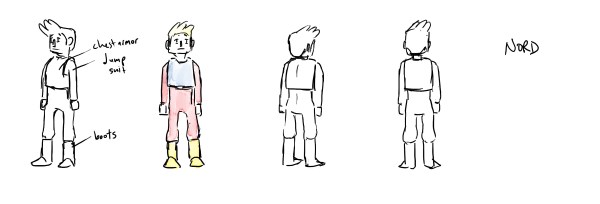
Maeb’s other companion would be a blond, sensitive, super-genius named Nord, who would function as the anxious, cautious, “I don’t know about this you guys” comic relief.
(You could apply psychoanalyze this. Zettle as the id, Nord as the superego, and Maebs as the pragmatic “can-do” ego in-between.)
I wrote a script and Phil put together an animated storyboard for Nickelodeon, hoping they might pick up the series.
Nickelodeon said no, and we put Mudball away, moving on to other projects. But I have already begun to transform this concept into a far more serious novel, returning to the savage intensity that Golding intended. As this draft comes along, I will put out updates about concepts and characters.
For now, I hope you enjoyed my trilogy of posts about a failed webcomic and cartoon. Feel free to contact me with your failures, and we’ll revel in our misfires together.



 Is it?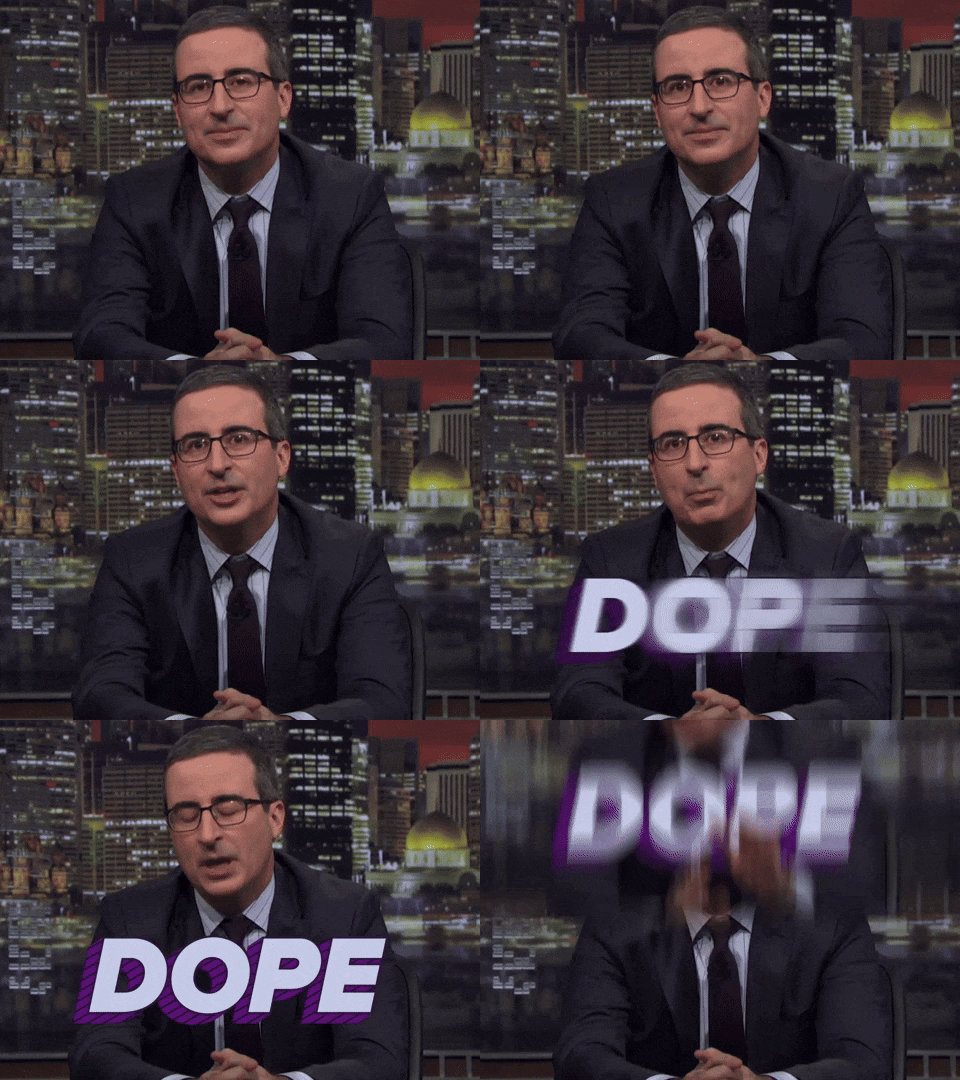
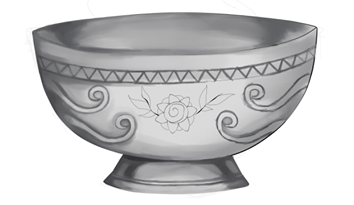 Obviously the idea of a tempting, powerful metal object was stolen from Lord of the Rings. Ten-year-old-me must have ransacked his brain meat trying to think of an alternative to The One Ring and settled on a bowl. Maybe he was eating cereal.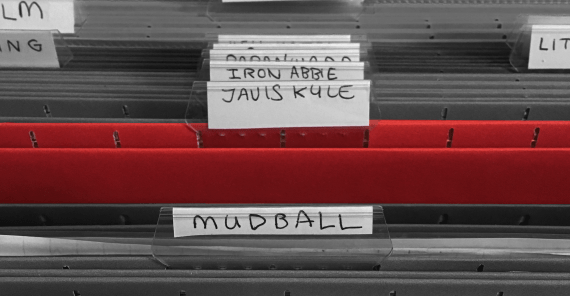


 The worst thing? It was a school assignment. Someone was forced to read this sword-and-sorcery swill.


 But she was joined by new allies.
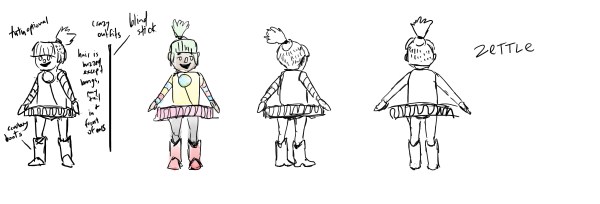 We wanted her to represent the poor working-class, so she wore colorful, discarded clothing with no particular order or schema. She had style—it was just not like anyone else’s.
 (You could apply psychoanalyze this. Zettle as the id, Nord as the superego, and Maebs as the pragmatic “can-do” ego in-between.)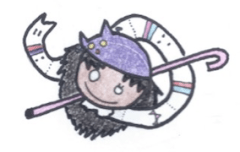
 Desmond, Write